Wednesday, March 18, 2009

Wolfgang Amadeus Bartok

On performing Bartok's concerto no. 3 with the Rhode Island as well as the Fort Wayne Philharmonic Orchestras - February 28 and March 14, 2009.

In the midst of a February month dominated by playing four different concerti (Schumann, Brahms 1, Mendelssohn 1 and Bartok 3), I suddenly discovered something which at first seemed totally absurd - that Bartok has potentially more in common with Mozart than say Schumann or Brahms. To be more specific, I realized that by thinking in Mozartean terms I would reveal more of the mystery in this piece (Bartok 3), get closer to its core, its ultra sensitive quality, its unique intimacy.

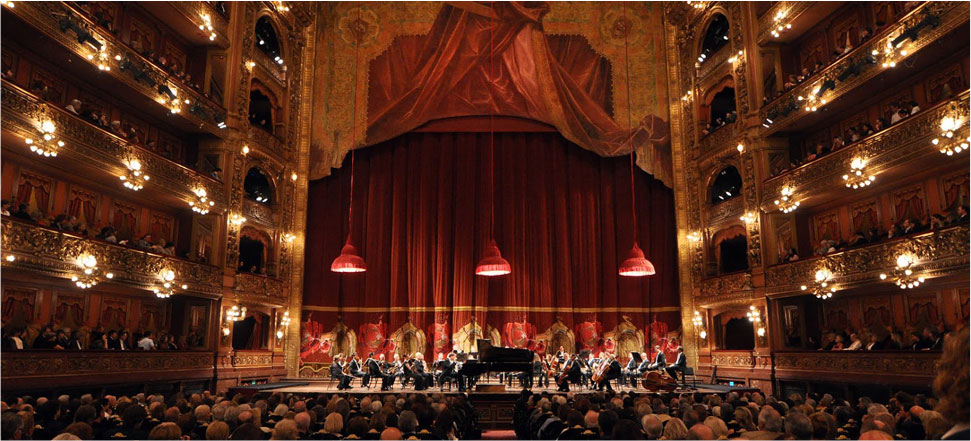
As I walked on stage I saw a magnificent sight - a huge instrument comprised of nearly eighty musicians - string players, wood winds, brass and percussionists who were playing a wide range of instruments in all shapes and sizes. The stage was completely packed.

During the first run-through of the piece I recognized much more Stravinsky and Debussy in our playing than say Bach or Mozart. I believe there is a strong misconception of Bartok as being an aggressive, heavy-handed composer. I often hear his music being played loudly and with some brutality. In music history of the twentieth century, Stravinsky's use of the simplest rhythmic patterns being repeated, and elevated above melody is called "primitivism." We also use the same term when addressing Bartok's melodic lines which are derived from folk melodies and especially peasant songs from Hungary and the neighboring countries (Romania, Bulgaria). Yet, these melodies, simple as they may sound, use quarter tones in a melodic scale, which is far more elaborate than "our" major or minor scales. Their rhythmic ingenuity juxtaposes similar recognizable rhythmic patterns in a way that creates entirely different stresses and tensions within the phrase. So different than Stravinsky. Primitive would not be the word I would use.

We begin again. This time I ask the orchestra to "Think Mozart". The scoring of the opening is so thin, so minimal - no tutti, just strings, timpani and piano. The very first notes, rather than create a Debussy-like murmur, I ask the strings for the precision and clarity that would characterize a Mozart accompaniment. The timpani should sound like as if it is playing "pizzicato." On top of that I could introduce my folkish dance. This intricate and very peculiar dance is deceptively simple. Its complexion is due to the displacements of strong beats and weak beats within the bars. It needs extreme attention to agogic, stresses and overall phrasing. A different kind of listening is asked for. Transparency is crucial. When this opening theme reaches its climax and brass instruments are added, it is still with the same sense of clarity and style that defines the classical era, rather than the full blown thick massive sound of late romanticism.

In the second theme, piano, strings, winds and percussion participate. Sounds big...? Well, "yes", however the result is quite
the opposite. In this subtle interplay between the various instruments, piano is the leading voice while the other
instruments add spices, colors and missing beats. The use of each instrument - triangle, side drum, horn, clarinet, violins is so economic, so sparse. What is even more fascinating is that to my ears, Bartok is asking the percussion instruments to sound like string pizzicato, the strings are asked to sound like wood-winds or alternatively like light percussion instruments (i.e. triangle), the wood-winds sound somewhat like a piano, and the piano... well, with music that has such purity and directness of expression, the piano needs to combine the clarity and precision of an early fortepiano with the infinite resources that the modern instrument can provide.

Let's think about that - asking a percussionist to sound like a wind player... or the latter to sound like a piano... This is a revolution to our common notions of sound. But that belongs to another entry.

Early in his life Bartok was most influenced by the composers he emerged from - Brahms, Liszt, Strauss. As he evolved, during the 1920s, Debussy and Stravinsky became a great source of inspiration. Now, late in his life (with the present piece), he is looking back to Mozart and even further... to Bach! It is in the first movement that I felt the greatest benefit in listening through Mozart "Ear-glasses." In the following movement, the slow second movement, an altogether different atmosphere is created. Its religious state of mind, its choral as well as polyphonic writing resurrect another very familiar figure, that of Johann Sebastian... Bartok.


Alon Goldstein


Thursday, February 12, 2009

From Schumann's diary...

Robert Schumann documented nearly every day of his life since his teenage years. On Oct. 1, 1853 a young composer age 20 came to visit. On that day Schumann wrote in his diary just one line:

"A visit from Johannes Brahms (a genius)"

Monday, November 24, 2008

Ave Maria

On performing Schubert and Schumann songs at the Phillips Collection (Washington DC), Second Presbytarian Church (Baltimore), and the Cultural Center (Chicago).

There are moments in our lives that are totally unexpected and yet so important and meaningful. They energize us beyond any predictions, and although few and far in between, these special moments are an essential part of our lives.

Magical moments - their essence is also in their brevity. Truth be said, I rarely know when they will appear, envelope me, clean my thoughts, clear my hopes, and re-direct me towards the goals which I laid in front of me.

A few weeks ago, I was preparing for three concerts which mixed songs of Schubert and Schumann with solo and chamber music repertoire. I believe that every great pianist must posses a strong urge to accompany singers - to support, to provide a cushion for the most natural of musical instruments - the human voice - to emerge, soar and bloom... then land. In addition to that, I must add, the repertoire is second to none.

As it happened, the day prior to our last concert, we - soprano Hyunah Yu, and I - were rehearsing leisurely at the Cultural center in Chicago, one of this city's many unique landmarks. Our rehearsal began with five Schubert songs, and ended with five Schumann songs.

Playing through these miniature masterpieces one by one, indulging in the sound of the language, admiring the poetry and above all listening, observing, re-living the way Schubert and Schumann painted these words, these sentences, these feelings / emotions in music..... it was easy to forget oneself in the space between what is conscious and what is unconscious. Time and space were of no importance. We were floating in a special place.

Schubert's Lachen und Weinen ("Laughing & Crying") - so seductively simple. A beautiful melodic line that changes its color, its reflection each time the accompaniment moves between major and minor, softer or louder. Im Früling ("In Spring") starts up as another strophic song, then transforms completely when the poet ceases to describe nature, and immerses himself in describing her - her image. At that moment Schubert gives me the most achingly beautiful melodic coloratura, floating above and below, inside and outside the melodic line sang by Hyunah. The thorny Heidenröslein ("The Briar-Rose") comes next. My role in this song is mainly "um pa, um pa..." However, finding that perfect balance between the simple and the sublime, the meaningful and the meaningless creates the miracle. Heimliches Lieben ("Loving in Secret") with its broad melodies is a challenge considering the high passion that the words suggest: "thy lips touch me";"trembling lift my breast";"my eye's aflame"... Are you sure this is loving in secret...?
And then Suleika ("Suleika") which has a much darker tone than the previous songs. With Schubert, major is at times sadder than minor. The b minor key of this song's breathless, worrisome first part changes to B major and even the slightest of hopes is crushed. It hearts.
Each song is an entity - its subject matter, its sub-context, its philosophical overtones. These profound musical jewels capture the widest array in our eternal emotional resources.

Onto our Schumann group. How different is this composer from the other in his choice as well as interpretation of great German poetry. Schumann's hyper sensitive changes of moods are reflected in his songs, some are as short as one page. His demons / imaginary friends are an integral part of the music. Ambiguity is central to the understanding of this enigmatic composer. I think Schubert allows us to concentrate on the poem through his music, whereas Schumann forces us to listen to the music through the poem!

In Du bist wie eine Blume ("You are like a Flower") the singer tells us one story, while the piano's background and foreground reveals the hidden subtext. Der Nußbaum (The Walnut Tree) gives us with its ongoing repeated refrain the sense and sensibility we always crave for. Liebeslied ("Love song") gets to our place of raw emotions and Röselein, Röselein! ("Little rose, Little rose!") again takes us on a wild ride within Schumann's multiple personalities. Alas, Widmung ("Dedication") closes our second group of songs, and with it our program. They say that "good composers imitate, but great composers steal..." At the end of this most passionate song / gift, which Schumann wrote to Clara, he quotes the famous Ave Maria of Schubert. A truly stroke of genius. Our rehearsal came to an end. Or has it?

All this was just setting the stage for what was to come next. I took back the Schubert album and found the original Ave Maria, the source. After all, couldn't a performer, in this case - your truly - ask for an enocre? Hyunah came closer so we could look at the music together. She apologized in advance if it will turn out that she would not sing the entire song, to save her strength... but she did! She could not stop and neither could I.

It was dark outside, most people went home already, and yet the few that were in the building gathered around us. We started our evening with Schubert, continued with Schumann quoting Schubert, then decided to end with bringing the former back to life. I actually think that it was he that brought us back to life. I played the song at a slightly slower tempo then usual. Well, I did not want this to end. I felt so privileged to have had this magical moment of intimacy... of ecstasy! The gentle melodic curves of Ave Maria repeat three times. Within me, it still goes on.

When the last notes of the heavenly sound of B major evaporated, I got up and hugged my partner for this most uplifting experience. Thank you, Hyunah!

Evening descended, silence was all around, our souls and the music that surrounded us became just for a moment something that we could not only feel, we could touch.
And then, it disappeared.

Alon Goldstein

Thursday, August 28, 2008

Dance in the Desert

Every August - far from the big city, but close to the human spirit, detached from our endless daily race, and connected to our need for time and peace of mind, deep in the south of Israel - in the desert – a remarkable, one of a kind enterprise comes to life. It is the "Tel-Hai International Piano Master Classes", which take place in Sde Boker – about two and a half hours south of Tel-Aviv.

Classical music in the desert? Can Mozart and the "Wilderness of Zin" find a common language? Will Beethoven find his way through the spring of "Ein Avdat"? In this surreal location the real becomes unreal, and the unreal becomes a dream, where our eternal music caresses the landscape in a way I have never experienced before, or maybe it is the other way around.

For nearly three weeks, some seventy pianists from about two dozen countries come together in search of answers, of discovery, in a most unusual place. For all of us – staff, students and spectators – this becomes an experience of everlasting increase of awareness, one that is drawn from several unexpected inspirational resources.


From the first day, private lessons, public master classes and concerts are being held. On top of that a competition of a newly commissioned Israeli work takes place as well as a concerto competition, in which three young pianists are chosen to play as soloists with the Israeli Symphony Orchestra Rishon LeZion. One of the primary goals of this unique project is that the center of gravity will be the students and their experience, which they are able to shape according to their own needs, with us – the professors – giving advice.

As the master classes begin to take shape, people get acquainted with themselves and with the land. Then, miracles start happening: I saw Mozart the other day, playing tricks with some girls at the bottom of "Zin" wadi. He can be so "uncivilized" at times... also in his music! A few other students went after midnight to watch the stars. Instead, they saw Chopin dancing privately with George Sand. She wanted to dance to a Polonaise, while he preferred a Mazurka. Usually he looks so frail. Here, in Sde Boker, I swear he was feeling much stronger.

After the first few days a sense of familiarity takes place, and adventures are attempted. We all travel together about thirty minutes south to "Machtesh Ramon", the largest natural crater in the world. On the way we make a brief stop to admire the unfolding view. In the far distance we can almost see Haydn working on his new "Creation". Here, in Sde Boker he is regaining some of his lost fame, with countless of fine performances of his sonatas.

In "Machtesh Ramon" we go for a hike. A quick glance into the impressive horizon lying in front of us sends our imagination soaring. These are sights coming straight out of the book of Genesis. Looking at the walls of this enormous natural structure reveals millions of years of history. Can our music, which is mostly from the last three hundred years, somehow relate to that?

Oops… suddenly Ginastera jumps out of the cliff, with his Argentinean dances. They almost sound as chaotic as Haim Permont's Moment Musical – the commissioned work for this year's classes. Beethoven decides to join us along for our walk. I think he hears better here, although he still complains. His late sonata – no. 30 in E major Op. 109 – is performed three times during the course of this festival. Is this a coincidence, or does late Beethoven fit our atonal landscape better than anywhere else? We head back just in time to have some cheese and wine, and hear Liszt trying to impress Clara Schumann with his flamboyant playing of a new "Israeli Rhapsody". I believe he is thinking of a new Annees de Perelinage ("years of wondering") – after Swiss and Italy, now… Israel!!

One morning a family of ibexes (mountain goats) climbed up from the valley to listen. One after another, I counted sixteen. People say that classical music has a shrinking audience. Maybe we should turn then to the animals... Perhaps we should "invite" nature. We might find some answers. Schubert certainly thinks so. He just rented a little trolley calling everybody "all aboard", before disappearing in the distant creek.

If classical music is dead, then I guess the desert has no life: I see no water, yet there are so many different kinds of plants all around, up and down the rugged hills. I see no food, yet so many insects in all shapes and form find enough to live together in perfect harmony – scorpions, butterflies, spiders, beetles and many other kinds of small creatures whose names I probably will never know. The desert is full of life, and our classical music finds it to be a natural spring, full of pure energy.

Are we ready to take some risks – Brahms says "yes", as do Prokofiev and Rachmaninov, and of course Liszt. They dominate the "Concerto competition". Bach and Mozart preferred to stay out of this. Bach was last seen running after one of his fifteen children. They are absolutely thrilled playing with the ibexes. Mozart on the other hand was working on a new opera – "The Magic Canyon".

The competition begins. Risks are taken. Mistakes are made. These are all essential in the learning process. Out of fifteen contestants, six are selected to play in next day's finals. Three are chosen to play in a couple of months with the orchestra.

By now, two weeks have gone by. Only five days are left and it seems to me that most students are going through a period of transformation – they spend most of their time outside, rather than inside, some even decide to sleep out in the desert. Is it the music, the way we teach here, or is it the place? I truly believe that the answers to the questions we encounter, when we learn a new piece, do not lie all inside the practice room. They are also found outside – in a place, in a conversation, a hike, a visit, and sometimes also in just marveling the surroundings of a place like Sde Boker.

There are only a couple of more days. Schumann hasn't yet sent out all the invitations for his new "Desert Carnaval". I heard he has some new characters in it that we have never heard of. He must hurry up if he wants Mendelssohn to join the party. The latter thinks he found a new symphony hidden in one of the caves here. Will he resurrect another composer yet again?! Tchaikovsky in the meanwhile has to quit worrying about hearing his Nutcracker piano arrangement played here. Who said one cannot Dance in the Desert?

A total of 72 students and 14 teachers performed about 150 pieces in the concerts, worked on 27 other pieces in the public master classes, and explored countless of other works in the private lessons. We head to a Bedouin tent for our farewell dinner before waking up from the dream and going back to reality.

Two and a half weeks of intense back and forth between young musicians and senior ones, all nourished by this magical environment changed us, made us more aware, enriched, rounded, rugged, inspired and perhaps even... better pianists.

See you next year!!


Alon Goldstein

Sunday, July 27, 2008

In Memory

July 16, 2008 - A dedication prior to performing the pre-concert recital at the Seattle Chamber Music Festival.

"Ladies and Gentleman, good evening.
Over the past few days, since I arrived in Seattle, people have been asking me why I changed my program for this pre-concert recital from Beethoven's Waldstein sonata to Bach' s Jesu, Joy of Man's Desiring and Sheep May Safely Graze, along with the Janacek sonata Oct. 1, 1905 - From the Street.
While there were a few reasons (mainly logistical) that led me to change the program over a month ago, it was the news that broke-out this morning from my home country of Israel, that seemed to have dictated the real reason.
Earlier today a controversial prisoner exchange occurred, in which the people of Israel were holding their breath, expecting to receive two of its kidnapped soldiers, hoping that they were still alive. Instead, two caskets were thrown onto the ground by their despicable captors. The country is torn as well as united in the grief of the families.
This evening, playing the Beethoven sonata could not have taken place. It is Bach's eternal prayer for some kind of peace and forgiveness, unification and love, that needs to be. But, it is also Janacek's sad reminder of the tragic spiral of current events that dominate our world these days, and which we seem not to find a way to reconcile. Tonight I could not have played anything but the Bach and the Janacek.
Ladies and Gentleman, with your permission, I would like to dedicate this concert to the memory of Eldad Regev and Ehud Goldwasser."

Alon Goldstein

Tuesday, June 10, 2008

A Mozart Mystery

Preparing for performances of Mozart's Piano Concerto no. 12 in A major K. 414.
July 11, 2008 in Shippensburg, PA. with the Chamber Orchestra of the Summer Music Festival and David Amado conducting.
July 14, 2008 in Seattle, WA. at the Seattle chamber music festival.

In the past several weeks I have been thinking whether to write about my experience of playing Beethoven's "Waldstein" sonata for the first time, or maybe about the new discoveries I had when playing the Schumann piano concerto with three different orchestras last month. But as it turns out, something else, entirely different came up which I wanted to share. It is somewhat a mystery - a Mozart mystery.

I am in the midst of preparations for concerts of what is for me a new piano concerto - Mozart's concerto no. 12 in A, K. 414. Playing Mozart in the course of the season is, in my opinion, one of the most important things a musician can do in order to continuously develop, learn and raise his level of awareness to subtleties of rhythm, shades of sound as well as agogic, stresses and nuances of a phrase. Afterwards comes... exhaustion!

As I am learning the second movement of this delightful concerto I reach the point where the piano first departs from what was already introduced before by the orchestra. We are in the land of divinity, and this point of departure takes us a step even higher: Suddenly, without prior warning or any preparation the piano soars into a new melody - one with such heavenly beauty... it makes me stop. Not that it is "too much", it is just so overwhelming, I want to know where it came from.

This magical moment, just as it unnoticeably appeared, it disappeared without ever returning. But Why?! Won't there be a recap of the material, as is the case with music written in the classical era? If it is so beautiful, this magical moment, why not bring it again? Alas, why wasn't it announced before, or wasn't I told so I could properly prepare?

I look back at other Mozart concerti which I played over the years - No. 11 in F (K. 413), No. 13 in C (K. 415), No. 20 in D minor (K. 466), no. 23 also in A (K. 488), and no. 24 in C minor (K. 491) among others. Do these concerti all have a special moment such as the one I have just experienced? The answer is a resounding "yes!" - All of them have that moment which shows up unannounced, lingers for just a little, then goes away and shall not return.

Can we find similarities between these special secrets - "yes" and "no". "No" because there is really no pattern for their appearance- they could come during the course of the 1st, 2nd or 3rd movements. They can occur basically anytime! Or can they? Are they a result of pure spontaneity by a genius, or are they pre-planned? Does their function change depending on the place which they appear? Do they influence the structure, the unfolding of the movement?

One immediatey notices when these moments unveil themselves, but it is for different reasons that their beauty becomes so apparent: It can be a lonely melodic line singing high above in utmost simplicity in between outer sections of chordal writing full of dense texture as is the case in the present concerto K. 414. Or it can be the sudden launching into high passionate Sturm und Drung section at the end of a courtly dance movement - a Menuet, as is the case in the final movement of K. 413.

When I look for similarities between these cherishable moments, several realizations come to mind: their strength is a function of their brevity. Their sudden appearance and the fact that they will not come back is a virtue. They illuminate what we have just heard and what is yet to come.

Another thought has to do with the sensuous beauty and deep feeling from which these moments spring - maybe this is a glimpse into the composer's innermost, his inner-life, far from concealing the inward glow of passion!

These special places are always in complete contrast to what has happened before, yet their appearance sounds so inevitable. It is quite fascinating the different ways in which Mozart creates these very personal moments. In K. 414 it is a new melody of entirely new character on top of the simplest accompaniment - repeated chords; in K. 413 it is a "circle of fifths", which in the context of what has happened before, is quite shocking and at the same time so soothing...; In K. 491 when the tragedy, which was set forth at the opening slowly transforms through glimpses of hope when the second subject is introduced by the piano, a sudden, totally unexpected return of the opening theme (now re-orchestrated with solo Flute over piano accompanying) erases all traces of a positive outlook.

In K. 488 during the course of the exuberant Finale an "uninvited" guest arrives - Antonio the drunk gardener - in the form of a new theme in a new key. It converses with the orchestra, flirts with it, shouts at it... and goes away - a pure miracle! Why the gardener? Why here? It is not a "necessary" part of the "form". But maybe Mozart is not writing "forms", he is writing stories, and as the story unfolds, so does the twists and turns of his music.

My good friend Jonathan Biss wrote in his blog about the "sense of the mercurial in Mozart - the sensation that the character of a phrase is being determined as it is played as a reaction to the provocation that was the previous phrase - is of utmost importance. And that cannot be faked - you can only give the impression of being in the moment by actually being in the moment."

I think this all adds up to our efforts to understand this "mystery." We will never be able to solve it, but maybe, just maybe we will be able to get closer to it, feel it, and possibly even touch it momentarily.

Mozart wrote in a letter to his father in 1782 about the concerti K. 413, 414 and 415: "...There are passages here and there from which the connoisseurs alone can derive satisfaction; but these passages are written in such a way that the less learned cannot fail to be pleased, though without knowing why..."

I think this applies to these miraculous moments. And so next time when you listen to a Mozart concerto, look for these special places where a shiver runs through the body, a smile lights up the face, and you could hear Mozart laughing high above. You have just witnessed yet another layer of this composer's intimate personality. He whispered a secret in your ear!

Alon Goldstein

Wednesday, April 9, 2008

The Road Not Existed...

There are big cities, there are small cities, there are tiny little cities, and then there is Tiffin Ohio. This American city brought about yet another big smiling question mark on the face of Laurence, my relative from New York. Other than telling me with his witty touch of cynicism "it is my favorite city", or "been there many times...", he seemed to be at a loss in terms of its geographical whereabouts. He would not even admit that it is within the continental United States.

So there was no surprise when after asking the journalist that interviewed me from the local newspaper about Tiffin's tourist destinations or places to eat... all I heard was laughter. To be more accurate: regarding places to eat, I was advised to drive out of town, and in terms of places to see... well, it seemed that the biggest attraction within a 50 miles radius was the interstate that takes you North or South of here! But I like traveling, especially when no expectations are involved. This trip to Ohio included three solo recitals - Tiffin, Dayton and Cincinnati.

After landing in Cincinnati airport and getting my rental car, I looked at the map and saw that to get to Tiffin, one only needed to go North on the interstate and turn East at one point. That's all. My hard working manager - Jennifer - equipped me with directions from Yahoo map, to be on the "safe" side. These directions, however, showed a much more "contrapuntal" way to reach Tiffin - one that when placed next to the most complex of Bach's fugues, would probably prove superior in its intricacy, and its use of deceptive cadences. In other words there were quite a few dead-ends! I saved it for posterity.

For the love of traveling I went for excitement and took the road less traveled. What followed, though, reminded me of Frost's famous poem "The road not taken". But I will have to rename it to "The road not existed!" Battling with countless of country roads, byways, bicycle trails, foot paths, sidewalks as well as all sorts of non-grooved ways, I finally reached my destination... three hours or so late. I used "the Schwartz".

After settling in my hotel, I went to look for the hall. At this point I have lost my sense of adventure... and asked in the lobby for the directions!

Initially, when learning about this engagement. I was expecting to play in a small shabby looking barn or something like that. I understood that this presenter wanted to introduce classical music to his community and so forth. I was happy to come.

How surprised I was to find out that this was not a small barn, but rather a stunning-looking theatre from the 1920s that hosts a series of serious productions each year. Between the Broadway productions, and other big events, there was me and my solo piano recital going on tomorrow night...

Every now and then when I travel in the US, I come across a theatre from the earlier part of the twentieth century, which ends up being truly a jewel - a real beauty that has been preserved, renovated and cherished by special people in the community, that would not let it turn into a parking lot, or just deteriorate. A few of such theatres which I had the opportunity to perform at include the Coronado theatre in Rockford Illinois; the Ohio theatre in Columbus Ohio; the Old opera house in Franklin New Hampshire; Powers auditorium in Youngstown Ohio and the "Ritz Theatre" here in Tiffin Ohio.

Most of these halls, as is the case with this one, started as movie theatres. For me, just to be in such places, looking at the intricate plaster work, absorbing the inspirations for the interior design - Italian Renaissance or Greek - observing the atmospheric lighting, embracing the warmth, all this is very memorable. It is tangible!

My recital included works by Bach, Janacek, Debussy, Schubert, and my friend Avner Dorman. Each piece in this recital program seemed to have drawn its inspiration from a different source - whether religious as in the arrangements from the Bach Cantatas; current events, which inspired the Janacek sonata; a picture from the French Rococo period influencing Debussy; nature scenes and German poetry coming to life in Schubert's Impromptus and an individual (the legendary Jazz pianist Art Tatum) which inspired Avner Dorman's 2nd sonata.

I started with the Bach, in order to get the audience (and myself) "into the zone", into the state of concentration from which all else can then unfold.

The Janacek is a favourite piece of mine. One of the reasons is that I don't think it is "music for the piano". I will explain: unlike composers such as Mozart, Beethoven, Liszt or Chopin, who understood the piano intimately, Janacek's expressive (at times explosive) piano sonata seems to have written without the instrument in mind. This tragic score rather than written FOR the piano, it is music first and foremost! played AT the piano.

One of the advantages of playing a piece like the 2nd sonata by Israeli composer Avner Dorman is that after it ends, you feel that the audience is in a "shock". They did not expect something like that - that a contemporary work by a composer they haven't yet heard of, will bring them to such enthusiastic response. The sonata's colorful, poetic / somewhat melancholic opening movement is coupled with an outburst of immense energy and rhythmic power in the closing second movement. This is a tremendous showcase of creativity and imagination.

Following intermission I played Debussy's "Island of joy". Dated September 1904, Debussy wrote gaily about it “Heavens! How difficult it is to play… This piece seems to embrace every possible manner of treating the piano, combining as it does strength and grace…if I may presume to say so.” Indeed this is a world that unites joy and pathos, humor and love. In Debussy’s score, rhythmic control and suppleness exist side by side, and intoxicating dance rhythms mix with surging melody.

Schubert's sublime first set of Impromptus culminated the program. These pieces have a depth of feeling and Romantic intensity from true happiness to the most profound longing. Childlike innocence mixes with spiritual darkness. Optimism and hope confronts a reality of solitude and poverty. The composer of more than 600 songs is writing here four extremely poetic masterpieces. The range of emotions expressed in these exquisitely beautiful pieces is overwhelming. Schubert, who died at age 31, was able to reconcile the so called Classical style with the Romantic spirit of freedom and emotional extremity. The song-like quality of these jewels comes across also in the more agitated second and forth impromptus which are fast but lyrical without any intention of sheer virtuosic display. The picturesque characteristics found in Schubert’s songs are an essential part of this music – nature, the rippling brook, the un-attained love, the loneliness of the wanderer, the feeling of being a stranger in any land, breathlessness of hope as well as resignation and despair, and many more.

At the end of the recital I felt grateful at the opportunity to play in this hall, and for this audience who most likely experienced this music just now for the first time.

The next morning, as I was heading to Dayton I decided (if you don't mind) to take "The road existed"...


Alon Goldstein